[ad_1]
In a follow-up on the diphtheria outbreak in the Northern Territory, Australia, The Centre for Disease Control now reports 17 cases of respiratory diphtheria notified since 23 March 2026 and 60 cases of cutaneous diphtheria notified since May 2025.
Respiratory and cutaneous diphtheria are vaccine-preventable diseases caused by toxigenic strains of Corynebacterium diphtheriae. Vaccination remains the most important measure to prevent against severe diphtheria.

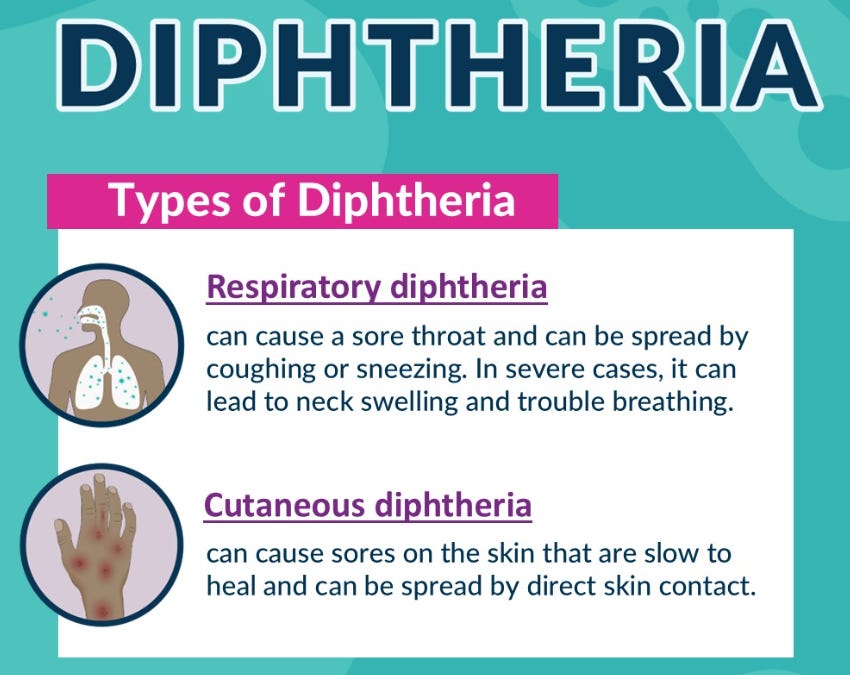
Diphtheria bacteria can live in the mouth, nose, or throat, or on unhealing skin lesions of people with the infection. Diphtheria can spread through respiratory droplets, which may be generated through coughing or sneezing, or through close contact with skin lesions.
Diphtheria: A short history, the disease, treatment and the success of the vaccines
Symptoms of respiratory diphtheria can include a sore throat, fever, pharyngeal exudate and an adherent grey pseudomembrane that can cover the tonsils and mucosa of the pharynx, larynx, and nose. Enlarged anterior cervical lymph nodes and oedema of the surrounding soft tissue can cause a characteristic ‘bull-neck’ appearance. Untreated, respiratory diphtheria can be life-threatening.
Symptoms of cutaneous diphtheria can present as chronic, nonhealing sores or shallow ulcers and can progress to being covered by a grey membrane.
If you like the reporting on Outbreak News Today, please consider a paid subscription for $5/month or $30 a year. Help support the cause of this niche journalism. It is appreciated.
[ad_2]