[ad_1]
Vitamin B6 helps many enzymes do their job, and beer can be a surprising source of it.
But there’s a catch: in plants, B6 mostly appears in one form (glycosides), and scientists still don’t fully know all the different forms (vitamers) present in beer.
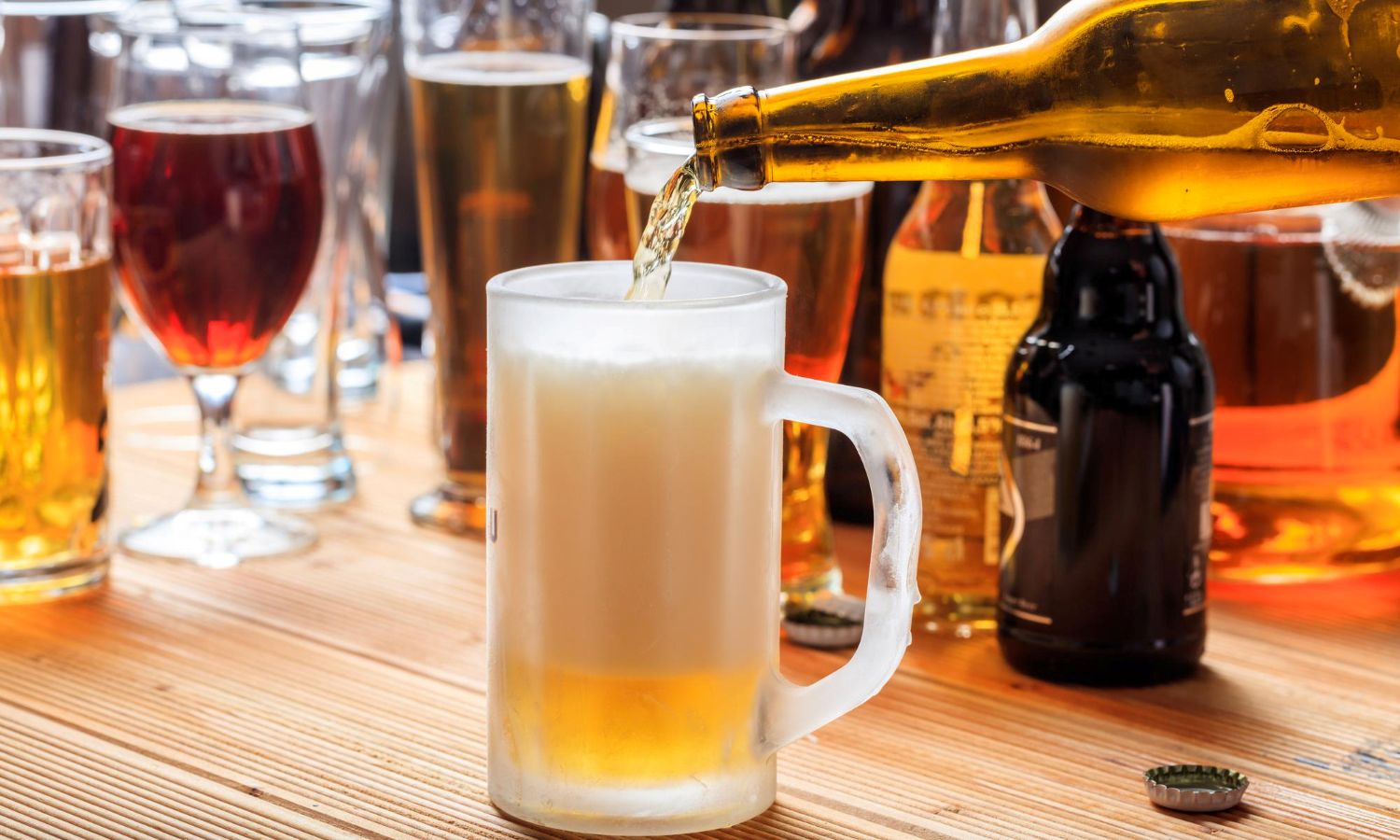
Scientists wanted to know what nutrients beer really contains. In a study of 65 types of brew, published by the American Chemical Society (Journal of Agricultural and Food Chemistry), scientists found that most varieties, especially regular and alcohol-free lagers (with greater B6 levels), and bocks were rich in vitamin B6.
There are many beer types, including porters, pilsners, pale ales, and others based on different brewing methods/colors/flavors. The consumption of alcohol-free beer is on the rise, with a forecasted 4 million hectoliters in Germany and 75 million hectoliters worldwide in 2024. This beer contains lots of the beneficial compounds from ordinary beer, whilst removing the dangerous effects of alcohol.
Vitamin B6 supplements may reduce anxiety and depression
However, it is still unknown if alcohol-free beer or the absence of ethanol removes vitamins. To find out, Michael Rychlik and colleagues compared alcohol-free beers against traditional German beers.
For their study, the scientists established a new and highly sensitive analytical methodology that uniquely integrates stable isotope dilution analysis (SIDA) within liquid chromatography–tandem mass spectrometry (LC–MS/MS). This sophisticated approach allows for the quantitative determination of various vitamin B6 forms in beer, including pyridoxine, pyridoxal, pyridoxamine, 4-pyridoxic acid, and three glycosylated forms such as pyridoxine-5′-β-glucoside, pyridoxine-5′-β-maltoside, and pyridoxine-5′-β-cellobioside.
The analytical procedure was thoroughly validated for robustness. It showed linearity, which signifies good measurement over a broad concentration range; precision, exhibited as uniform repeated measurements; and recovery, evidence of detecting target molecules. The method was also very sensitive, with the limits of quantification ranging from 0.20 to 12.9 μg/L and capable of detecting these phenotypes at very low concentrations.
The researchers went through 65 different samples of beer using this approach. The inspection indicated that bock beers, made using barley, had the greatest vitamin B6 content. Next were lagers, dark lagers, and wheat beers, followed by rice beers that had the lowest vitamin B6 levels.
Non-alcoholic beer that tastes just like regular beer
Alcohol-free and normal lagers contained similar B6 concentrations, suggesting vitamin content is not impacted by the removal of alcohol.
Specifically, the B6 in the case of beers produced by soft and non alcoholic fermentation with low-alcohol yeast strains was lower than that of alcohol-free beers after removing ethanol from fully fermented beer.
Typically, a conventional lager gave roughly 20 percent of the recommended daily intake of vitamin B6, while an alcohol-free lager offered nearly 59 percent.
According to the researchers, this study provides important information on vitamin contents in a range of beers and helps illustrate some potential health benefits of non-alcoholic beer for consumers.
Journal Reference:
- Simone Jahner, Elias Geilich, Carina Hagenauer, and Michael Rychlik. Quantitation of Vitamin B6 Vitamers and Glycosides in German Alcohol-Free and Full-Strength Beer by a Stable Isotope Dilution LC–MS/MS Method. Journal of Agricultural and Food Chemistry. DOI: 10.1021/acs.jafc.5c14229
[ad_2]