[ad_1]
GLP-1 and a related hormone called GIP perform four specific tasks in your body. Understanding these tasks explains why the drugs work for both diabetes and weight loss.

Published Mar 09, 2026 | 7:00 AM ⚊ Updated Mar 09, 2026 | 7:00 AM

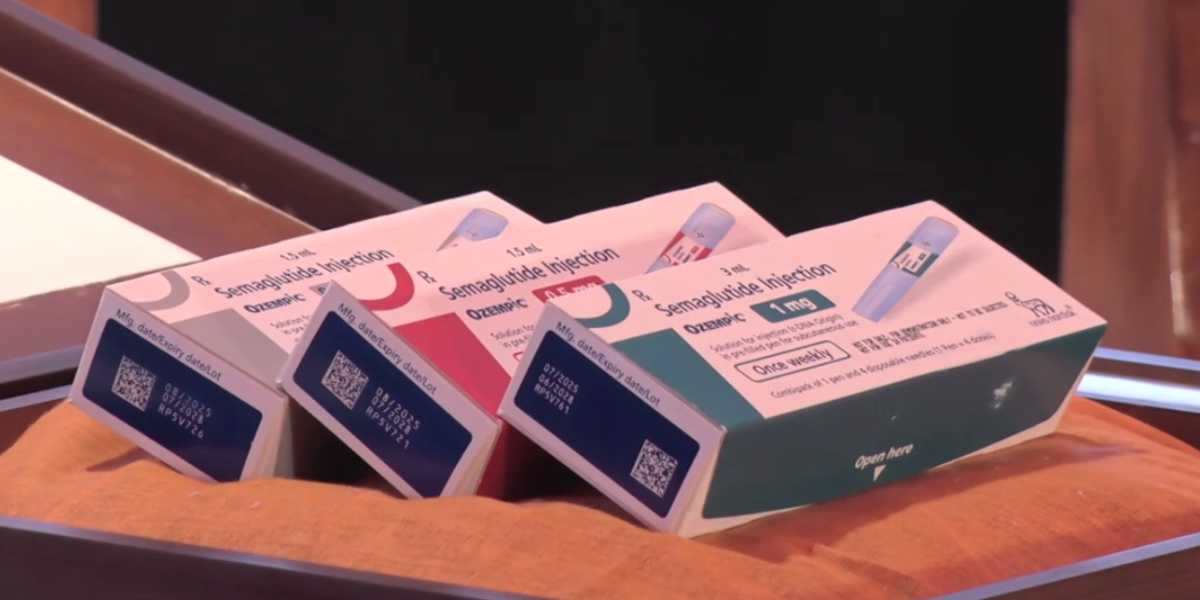
Ozempic. (Supplied)
Synopsis: Weight loss drugs such as Ozempic mimic the naturally occurring hormone GLP-1, which the intestine releases after meals to signal fullness and help the pancreas release insulin. They extend the hormone’s effect from minutes to hours or days, helping to control blood sugar and reduce appetite in people with Type 2 diabetes or obesity. Doctors, however, caution that they should be used only under medical supervision because they can also cause side effects.
Your gut releases a hormone after every meal that tells your brain to stop eating. It vanishes in minutes. Ozempic makes that “I’m full” signal last for days.
Every time you eat, your small intestine releases a hormone called GLP-1. This hormone does two critical jobs: it tells your pancreas to release insulin to handle the incoming glucose, and it tells your brain you are full and should stop eating.
In a healthy body, this hormone appears, does its job, and disappears within minutes. Your body breaks it down almost as fast as it makes it.
Ozempic and similar drugs are artificial versions of this hormone, engineered to resist breakdown. Instead of lasting minutes, they stay active in your body for hours or even days. That is why one injection per week works – the signal to feel full and produce insulin never stops.
“GLP-1 is actually a hormone that our body naturally produces. It is released from the small intestine, particularly the jejunum,” Dr Vidya Tickoo, Consultant Endocrinologist and Diabetologist at Yashoda Hospitals, told South First.
“The natural GLP molecule in the body has a very short half-life, only a few minutes. But these pharmacological agents mimic the structure of GLP and act on the same receptors while having a much longer duration of action.”
Also Read: The bane of growing up: How unpaid work make Indian women to forgo exercise
The messenger that disappears too quickly
Think of GLP-1 as a messenger running between your gut and your brain. When food enters your small intestine, cells release this messenger. It sprints to your pancreas with one instruction: make insulin proportional to the glucose coming in. Then it sprints to your brain with a second message: we ate, stop looking for food.
The messenger completes its job and vanishes. The entire cycle takes minutes.
For most people, this works fine. The brief signal provides enough time for insulin to handle the glucose and for the brain to register fullness.
But for people with Type 2 diabetes or severe obesity, the system breaks down. Either the pancreas does not respond well to the insulin signal, or the brain does not respond strongly to the fullness signal, or both.
The drugs fix this by replacing the sprinting messenger with one that moves slowly and stays much longer.
Four jobs, one hormone
GLP-1 and a related hormone called GIP perform four specific tasks in your body. Understanding these tasks explains why the drugs work for both diabetes and weight loss.
Job one: Tell the pancreas to release insulin. When blood glucose rises after eating, GLP-1 binds to receptors on pancreatic beta cells. This triggers insulin release proportional to glucose levels. More glucose means more insulin, but only when glucose is actually high. This prevents dangerous blood sugar drops.
Job two: Tell the pancreas to stop releasing glucagon. Glucagon does the opposite of insulin – it tells your liver to release stored glucose into your bloodstream. GLP-1 suppresses this signal when you have just eaten and do not need extra glucose.
Job three: Slow down your stomach. GLP-1 delays gastric emptying, meaning food moves more slowly from your stomach to your intestines. This creates a prolonged feeling of fullness. You ate an hour ago, but your stomach still feels occupied.
Job four: Signal your brain that you are full. GLP-1 acts directly on appetite centres in the brain. It creates satiety – the biological signal that you have eaten enough and should stop.
“Once released, GLP acts on the pancreas and stimulates insulin production. So as blood glucose levels increase after food absorption, insulin secretion also increases proportionately,” Dr Vidya Tickoo said. “GLP also acts on the brain and creates a feeling of satiety or fullness. This is part of the body’s natural mechanism to signal that we have eaten enough.”
Also Read: The kitchen story: How gendered division of labour hurts unborn babies
Why the natural version fails some people
Dr E Ravi Shankar, Consultant Endocrinologist at Apollo Hospitals Jubilee Hills, described GLP-1 and GIP as “incretin-based molecules” – hormones released from the gut that affect metabolism and body weight through multiple pathways.
“They enable the release of insulin from the pancreas when blood glucose levels are high. They can also control the release of glucagon from the pancreas. At the same time, they make you feel full because they delay gastric emptying,” he explained to South First. “That means the food you take has a delayed transit time from the upper gastrointestinal tract to the lower gastrointestinal tract.”
In people with Type 2 diabetes, the pancreas either does not produce enough insulin or body cells resist insulin’s effects. The brief natural GLP-1 signal provides insufficient help.
In people with obesity, appetite regulation fails. The brain does not respond strongly to satiety signals, or responds only briefly. The natural GLP-1 messenger arrives, delivers the message, and disappears before the brain fully registers it.
The drugs extend the signal from minutes to hours or days. It is like replacing a brief knock on the door with someone standing outside ringing the doorbell continuously.
The engineering that made long-lasting versions possible
The first GLP-1 drug, exenatide, was launched in 2005. Dr Ravi Shankar used it in the UK. “It was launched as a molecule called exenatide under the trade name Byetta. Although it was launched in India, it was not a big success here.”
The early versions required daily injections and produced modest results. But they proved the concept worked: extending GLP-1’s lifespan could control blood sugar and reduce weight.
Scientists then engineered molecules with progressively longer half-lives. Liraglutide requires a daily injection but lasts 13 hours. Dulaglutide lasts a week with one injection. Semaglutide also lasts a week but produces stronger effects.
“In the current market, liraglutide, dulaglutide and semaglutide are commonly available,” Dr Vidya Tickoo said. “Liraglutide is given as a daily injection, whereas dulaglutide is administered once weekly. However, the weight-loss effect seen with liraglutide and dulaglutide is not as strong as what we observe with semaglutide or tirzepatide.”
Also Read: With TFR declining, Chandrababu Naidu, who once advocated population control, now wants population growth
The dual-action drug that adds a second hormone
Tirzepatide, marketed as Mounjaro, does not just mimic GLP-1. It mimics both GLP-1 and GIP simultaneously.
GIP performs similar jobs to GLP-1: it stimulates insulin release and contributes to satiety. But it also acts on fat cells differently, improving how the body metabolises fat.
“GIP is also a hormone released from the intestine, but from a different set of cells. Like GLP, it is released when food enters the intestine,” Dr Vidya Tickoo explained. “GIP also promotes insulin secretion from the pancreas, contributes to satiety and slows gastric emptying. In addition, GIP has effects on fat cells and improves fat metabolism.”
Activating both pathways creates a synergistic effect – the combined impact exceeds what either hormone achieves alone. This explains why tirzepatide produces the strongest weight-loss results globally, sometimes reaching 20 percent of body weight.
“Because tirzepatide activates both GLP and GIP pathways, it has a synergistic effect. That is why the weight-loss outcomes with tirzepatide are currently among the best we have seen globally,” Dr Tickoo said.
GIP also appears to reduce nausea, a common side effect of GLP-1 drugs. “Another advantage is that nausea, which is a common side effect of GLP-1 drugs, tends to be less with tirzepatide because GIP appears to have an anti-nausea effect.”
Think of it as turning up the volume on a signal your body already uses
Your body already knows how to use GLP-1 and GIP. These hormones have regulated eating and insulin for millions of years of human evolution. The drugs do not introduce a foreign mechanism – they amplify an existing one.
The natural hormone whispers briefly. The drug shouts continuously.
For someone with Type 2 diabetes, this louder signal helps a struggling pancreas keep up with glucose demands. For someone with obesity, the prolonged fullness signal makes eating less feel less like deprivation and more like natural satiety.
But extending the signal creates risks. The natural version disappears quickly for a reason – it prevents the system from getting stuck in one state.
Dr Ravi Shankar emphasised that these remain prescription medicines with specific indications, contraindications and side effects. “These drugs are very effective, but only when used in the right person, in the right context and under proper medical supervision. If people start using them on their own without guidance, they can do more harm than good.”
Also Read: 9 out of 10 Indian doctors do not want their children to follow their career path
Beyond diabetes and weight loss
As the drugs evolved, researchers discovered effects beyond blood sugar and appetite. GLP-1 agonists showed cardiovascular benefits, reducing heart attack and stroke risk in people with Type 2 diabetes.
“Initially these drugs were meant mainly for the management of Type 2 diabetes, with weight loss as an added benefit,” Dr Ravi Shankar said. “But as the molecules improved and evolved, they eventually became medications not only for Type 2 diabetes but also for obesity itself, irrespective of whether the person has diabetes or not.”
Studies now explore their effects on fatty liver disease, polycystic ovarian syndrome, sleep apnoea, chronic kidney disease and even osteoarthritis knee pain.
“There is also evidence that they may help improve pain scores in osteoarthritis of the knees, improve walking distance in peripheral vascular disease, help control hypertension and improve lipid parameters such as LDL cholesterol and triglycerides,” Dr Ravi Shankar noted.
Some researchers speculate about effects on dementia and addiction. Dr Ravi Shankar remains cautious: “Some people are even claiming that they might help in certain forms of dementia. But it is too early to comment on that because we do not have concrete evidence yet.”
The engineering challenge: making the messenger last
Creating a hormone that lasts hours instead of minutes required precise molecular engineering. Scientists modified the GLP-1 structure to resist the enzymes that normally break it down. They added components that help the drug bind to proteins in blood, slowing its clearance from the body.
This explains why semaglutide produces stronger effects than liraglutide despite both being GLP-1 agonists. The molecular structure determines how long the drug stays active and how strongly it binds to receptors.
The progression from exenatide to semaglutide to tirzepatide represents decades of refining this engineering. Each generation lasted longer, worked more effectively and produced fewer side effects.

[ad_2]